
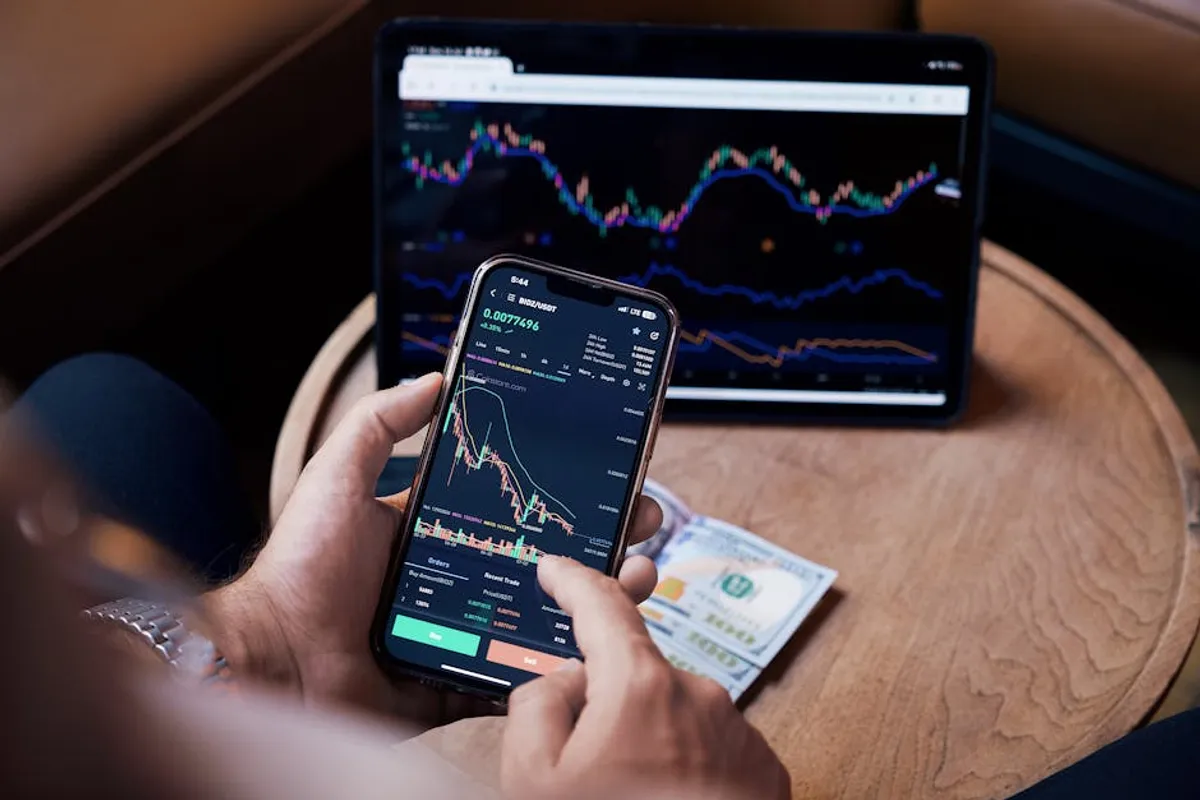
Real-time financial updates provide immediate, often sub-second, information on market movements, economic indicators, and breaking news that impacts financial assets. For SEO professionals, marketers, site owners, agencies, and publishers, understanding and leveraging this data is not merely about tracking stock prices; it's about identifying content opportunities, informing strategic decisions, and creating dynamic, high-value user experiences. The commercial relevance lies in the ability to react instantly to market shifts, generate timely content, and provide audiences with current, actionable insights that drive engagement and authority. Delayed data, typically 15-20 minutes behind actual market activity, offers historical context but lacks the immediacy required for competitive decision-making or truly current reporting.
What Constitutes Real-time Financial Updates?
Real-time financial updates refer to data delivered with minimal latency from its source. This means that as a transaction occurs on an exchange, an economic report is released, or a significant news event breaks, that information is transmitted and made available to users within milliseconds or seconds. This contrasts sharply with delayed data, which is often aggregated and distributed after a set time lag, typically 15 minutes, due to exchange licensing agreements or data processing cycles.
The scope of real-time data is broad, encompassing various asset classes and informational categories:
- Equities: Live stock prices, bid/ask spreads, trade volumes, market depth.
- Foreign Exchange (Forex): Spot rates for currency pairs, forward rates, and interbank quotes.
- Commodities: Current prices for oil, gold, agricultural products, and other raw materials.
- Fixed Income: Real-time bond prices, yields, and interest rate movements.
- Derivatives: Live option and future prices, implied volatility.
- Economic Indicators: Instantaneous release of GDP figures, inflation rates, employment reports, and central bank announcements.
- News Feeds: Breaking financial news, company announcements, geopolitical events, and analyst reports as they are published.
The defining characteristic is the speed of delivery, which enables users to make decisions or generate content based on the most current available information, often before broader market reactions fully materialize.
Core Applications Across Industries
The utility of real-time financial updates extends beyond traditional trading desks, offering distinct advantages for content creators, marketers, and businesses seeking to maintain relevance and provide value.
Financial Trading and Investment
This is the most direct application. Active traders, institutional investors, and algorithmic trading platforms rely on real-time data for instantaneous decision-making. Millisecond differences in price quotes for equities, commodities, or foreign exchange can dictate profit or loss. Algorithmic systems, in particular, execute high-frequency strategies that are entirely dependent on sub-second data feeds. Beyond raw price data, real-time news feeds, sentiment analysis, and economic indicator releases allow portfolio managers to react to market-moving events before they are widely digested. This immediacy informs decisions on position entry, exit, and risk management.
Business Operations and Risk Management
For businesses, real-time financial data can inform operational decisions and mitigate risk. Companies with significant international operations use real-time forex rates to manage currency exposure, optimize payment timing, and forecast international revenue more accurately. Supply chain managers monitor commodity prices in real-time to adjust procurement strategies, lock in prices, or anticipate cost fluctuations. Financial departments use real-time interest rates to manage debt, evaluate investment opportunities, and understand the immediate impact of monetary policy changes on their capital structure.
Content Creation and Market Analysis
Publishers, financial news outlets, and content marketers leverage real-time updates to create timely and authoritative content. This includes:
- Breaking News Alerts: Instant reporting on significant market events, company earnings, or economic data releases.
- Dynamic Data Visualizations: Embedding live charts, stock tickers, or economic dashboards into articles and websites.
- Trend Identification: Spotting emerging market trends or sector movements as they happen, guiding content strategy.
- Competitive Analysis: Monitoring competitor stock performance, M&A announcements, or sector-specific news to inform strategic positioning.
- SEO and Engagement: Creating content around trending financial topics with immediate data points can capture high-intent search traffic and increase user engagement through relevance.
Best for: Publishers seeking to maintain audience relevance and authority, and marketers aiming to capitalize on trending financial topics.
Essential Components and Delivery Mechanisms
Accessing and utilizing real-time financial updates involves understanding their sources and how they are technically delivered.
Data Sources and Types
The primary sources for real-time financial data are global financial exchanges (e.g., NYSE, NASDAQ, LSE), central banks, government statistical agencies, and reputable financial news wire services. These entities generate the raw data. Data vendors then aggregate, normalize, and distribute this information. Data types include Level 1 data (bid/ask, last trade) and Level 2 data (order book depth), alongside news, economic calendars, and corporate actions.
Technical Delivery Methods
Real-time data is typically delivered through specialized technical channels designed for low latency and high throughput.
- APIs (Application Programming Interfaces): RESTful APIs or WebSocket APIs allow programmatic access to data feeds. WebSocket APIs are particularly useful for real-time streaming, maintaining an open connection to push data as it becomes available, rather than requiring repeated requests.
- FIX Protocol (Financial Information eXchange): A standard communication protocol for electronic trading, widely used by institutional clients for order routing and market data.
- Direct Data Feeds: Some providers offer direct connections to their data infrastructure, often via dedicated lines or co-location services, for the absolute lowest latency.
These mechanisms ensure that data reaches end-users or applications with minimal delay, crucial for time-sensitive operations.
Critical Considerations for Implementation
Integrating real-time financial updates requires careful consideration of several practical factors beyond just data access.
Latency and Data Integrity
Latency, the delay between an event occurring and its data being received, is paramount. Different applications have different latency tolerances; high-frequency trading demands sub-millisecond latency, while a news website might tolerate a few seconds. Verifying data integrity and accuracy is equally critical. Data feeds should come from reputable sources, and mechanisms for error checking and reconciliation are essential to prevent misinformed decisions or incorrect reporting. Regulatory frameworks, such as MiFID II in Europe, impose strict requirements on timestamping and latency for financial transactions, highlighting the importance of precise data delivery.
Pro Tip: When evaluating real-time data providers, always inquire about their average and peak latency figures, data redundancy measures, and their process for data validation. A provider’s service level agreement (SLA) should clearly define uptime guarantees and data accuracy commitments, which directly impact the reliability of any system built upon their feeds.
Cost Structures and Licensing
Accessing real-time financial data involves significant costs. Data providers typically operate on subscription models, which can vary based on:
- Data Volume: The amount of data consumed (e.g., number of symbols, update frequency).
- Asset Classes: Access to specific markets or instrument types (equities, forex, commodities).
- Usage Rights: Whether the data is for internal use, redistribution, or display on public-facing platforms. Exchange fees for real-time data display can be substantial and are often passed through by data vendors.
- Latency Tiers: Premium pricing for lower-latency feeds.
Understanding the licensing terms and associated costs is crucial for budgeting and ensuring compliance, especially for publishers and agencies that intend to display or redistribute this data.
Leveraging Real-time Data for Strategic Advantage
For SEOs, marketers, and content creators, the strategic advantage of real-time financial updates lies in their ability to inform and accelerate content relevance. By integrating real-time data feeds, platforms can automate content updates, such as dynamically generated market summaries or personalized investment dashboards. This not only keeps content fresh and accurate but also positions the platform as an authoritative source for current financial information. Monitoring real-time market trends and news allows for rapid content deployment around high-interest topics, capturing transient search demand and driving organic traffic. For agencies, this translates into delivering more responsive client campaigns and providing data-driven insights that are immediately actionable.
Frequently Asked Questions
What is the primary difference between real-time and delayed financial data?
Real-time data is delivered almost instantaneously, often within milliseconds of an event, while delayed data typically has a lag of 15-20 minutes or more after the event occurs. Real-time data is critical for immediate decision-making and dynamic content, whereas delayed data is suitable for historical analysis or less time-sensitive applications.
How do publishers typically integrate real-time financial updates into their websites?
Publishers commonly use APIs (Application Programming Interfaces) provided by financial data vendors. These APIs allow for programmatic fetching and display of live data, such as stock tickers, charts, or news feeds, which can be embedded into articles or dedicated market pages to keep content current and engaging.
Are there legal or regulatory considerations when using real-time financial data?
Yes, significant legal and regulatory considerations exist. Financial exchanges and data providers have strict licensing agreements that dictate how real-time data can be used, displayed, and redistributed. Compliance with regulations like MiFID II (in Europe) or SEC rules (in the US) regarding data transparency, latency, and reporting is essential, especially for platforms involved in trading or providing financial advice.